
Research on colloidal nanostructures enters a new challenging stage which aim is to transfer the recent achievements of nanotechnology to optoelectronics with the specific aim of fabrication of electro- luminescent light emitting diodes (QD-LEDs). These novel light sources exhibit narrow electroluminescence which makes them perfect candidates for flexible displays and TV technology. The ongoing research on QD-LEDs is focused on the optimization of a multi-step fabrication procedure with particular emphasis on brightness, power consumption, and electroluminescence time stability.
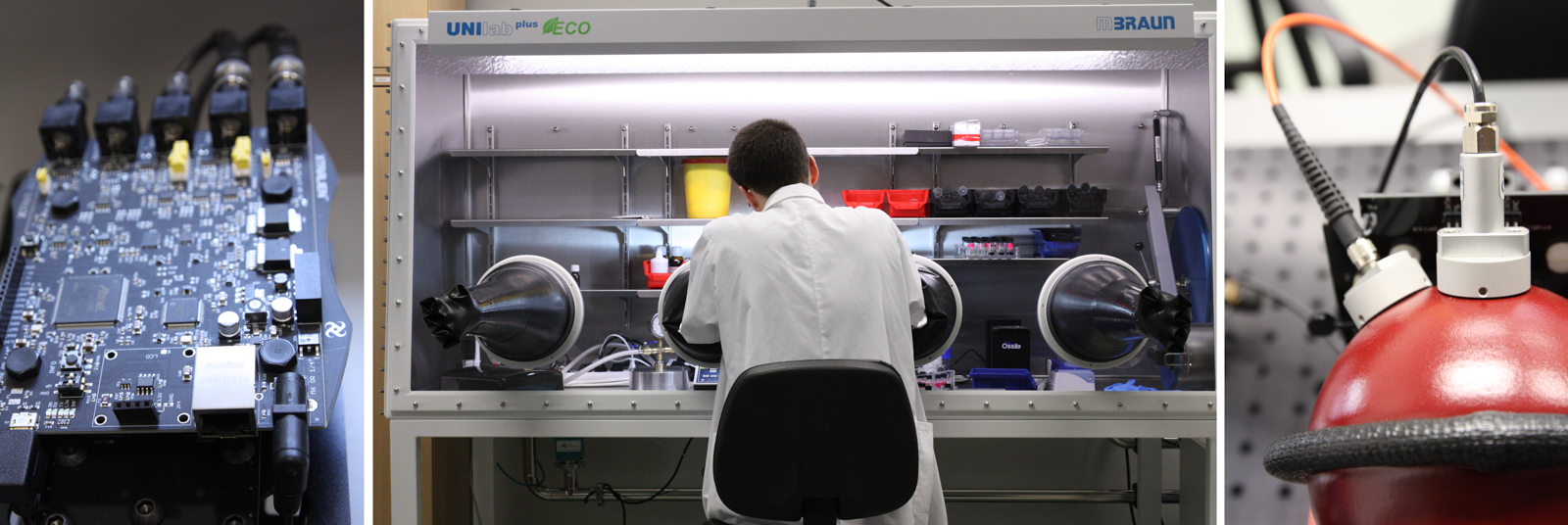
In our group, we fabricate QD-LEDs under an inert gas atmosphere using a spin-coating method for thin-film deposition. The active layer is based on colloidal nanostructures (quantum dots, nanorods, nanoplates) emitting at 400-700 nm with photoluminescence (PL) spectra as narrow as 20 nm and up to 90% of PL quantum yield. Recently, we have started a project which aim is fabrication and characterization of LED devices based on quantum dots designed for near infrared range (900-1600 nm).
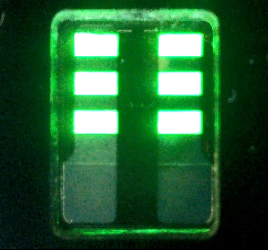 A photograph of QD-LED under bias